
Introduction
I’ve referred to the development of the LS3/5X compact, high performance hi-fi speaker in blog posts here and here, and I’ve now decided to give the speaker its own website pages and formally make it available for direct sale. Availability and Sales information can be found at the bottom of this page.
The core idea for the LS3/5X came from a question: What would the iconic and much loved BBC LS3/5A sound like if it were re-engineered around mid-2020s state-of-the-art drivers; those with an order of magnitude lower distortion than the best of the 1970s? Answering that question resulted in a project that quickly gained momentum and consumed a not inconsiderable number of development hours and days. The result however is an extremely high performance loudspeaker that demonstrates without any doubt that driver technology has very audibly advanced considerably.
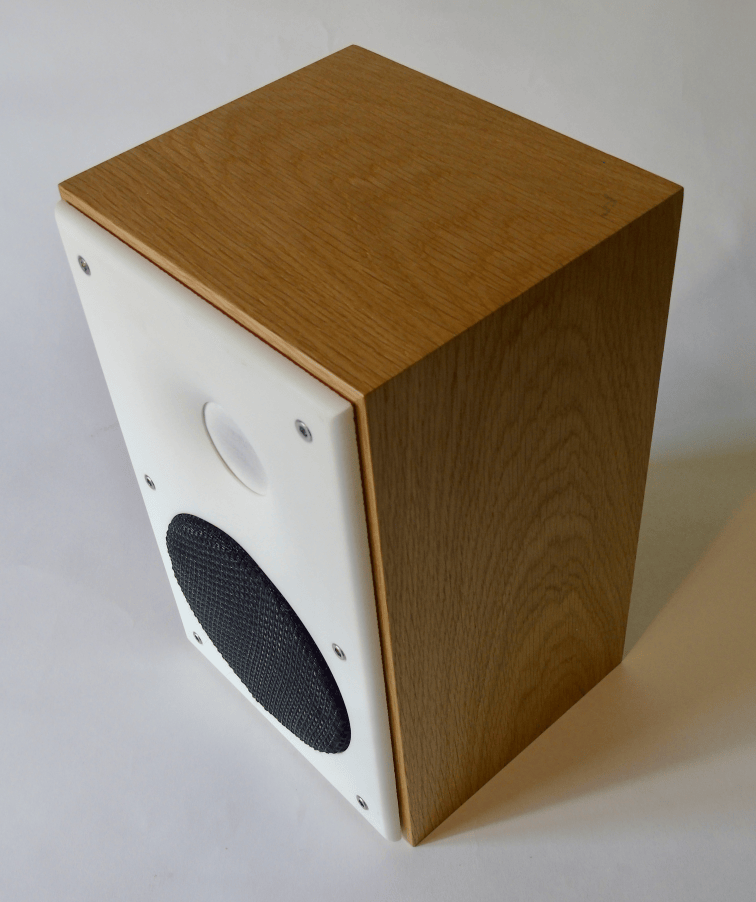
LS3/5X Technical Description
The Low/mid Frequency Driver
The LS3/5X low/mid driver is a 130mm diameter Purifi USHINDI (a Swahili word for victory) unit designed very specifically to offer levels of harmonic and intermodulation distortion that are an order of magnitude or more lower than those typically generated by conventionally engineered moving-coil drivers. The USHINDI technology also results in optimised force factor/excursion linearity, minimal voice-coil inductance modulation and significantly reduced magnetic hysteresis distortion. USHINDI drivers also offer far greater linear diaphragm excursion capability than conventional units; ±9.8mm in the case of the LS3/5X driver.
The diaphram of the LS3/5X USHINDI bass/mid driver is an aluminium item with a folded return around its periphery that stiffens the construction and minimises edge resonance. And the unique USHINDI Neutral Surround not only offers optimised vibrational energy dissipation it offers a solution to the distortion generated in conventional roll-surrounds due to their inherently unequal radiating area on in and out strokes.
The High Frequency Driver
The LS3/5X tweeter is a 26mm aluminium ceramic dome unit front loaded with a curved waveguide. The driver offers inherently minimal distortion due to its underhung motor system and copper cap pole piece. The tweeter also incorporates a damped rear chamber and flow optimised vented pole piece. The aluminium ceramic dome remains pistonic to over 20kHz and the driver’s very low (< 700Hz) fundamental resonance frequency, in combination with the acoustic gain offered by the waveguide, enables an unusually low crossover frequency.
The Crossover
The LS3/5X crossover comprises a symmetrical 3rd order (electrical) filter network with a crossover frequency of 1400Hz. The low crossover frequency helps ensure that the system vertical directivity is free of significant discontinuities at significant off-axis angles and that, in combination with the tweeter waveguide, the horizontal directivity is free of discontinuities through the crossover region. The crossover is constructed using very high quality high-end audiophile grade capacitors, inductors and resistors.
The Enclosure
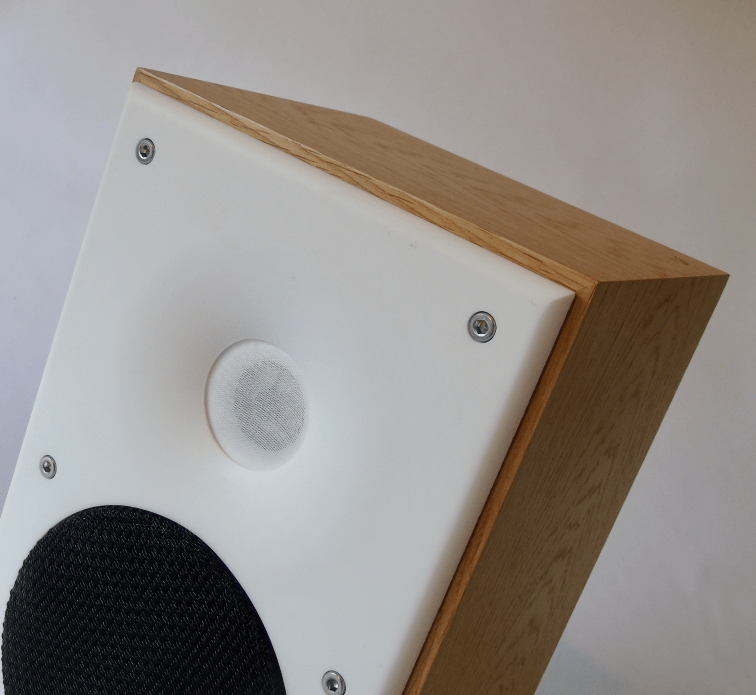
A significant contributor to the performance and character of the LS3/5A is the construction of its enclosure: a relatively thin-wall birch plywood carcass incorporating hardwood corner fillets and damped internally by bitumen panels. The LS3/5X enclosure follows exactly the same construction principles apart from two differences. Firstly, the front panel on which the drivers are mounted is made from Permali (a resin impregnated plywood) rather than standrard plywood, and increased in thickness from 9mm to 15mm. Secondly, the waveguide panel of the LS3/5X, which effectively replaces the LS3/5A front grille, is made from HIMACS mineral powder/resin composite. The HIMACS panel results in significant further increase in cabinet rigidity.
LS3/5X Performance
Availability and Sales
The LS3/5X will only ever be hand-built in very low numbers, but is now available to order. The direct sale price is £4999 (UK Sterling) per pair plus shipping and, for international sales, plus any appropriate import duties and taxes.
A 30% (£1500) deposit is required with order. The manufacturing lead time is likely to be three months minimum (depending on component availability).
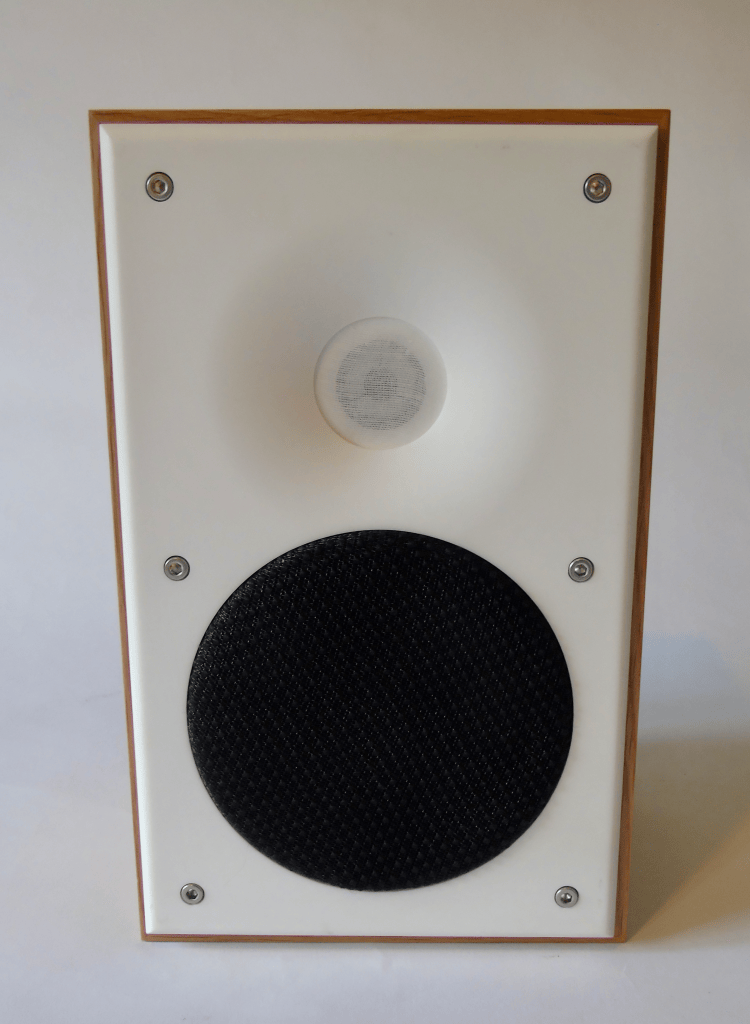
Enclosure finish options of rosewood, walnut, oak and olive are available as standard, however custom cabinet finishes and colours are potentially available at extra cost. The standard waveguide panel colour is satin white although other colours may at times be available. The low/mid frequency driver grille fabric is the same Tygan as used on the LS3/5A, and the high frequency driver grille is white muslin.
Should you be interested in owning a pair of LS3/5X please use the contact form below.


